
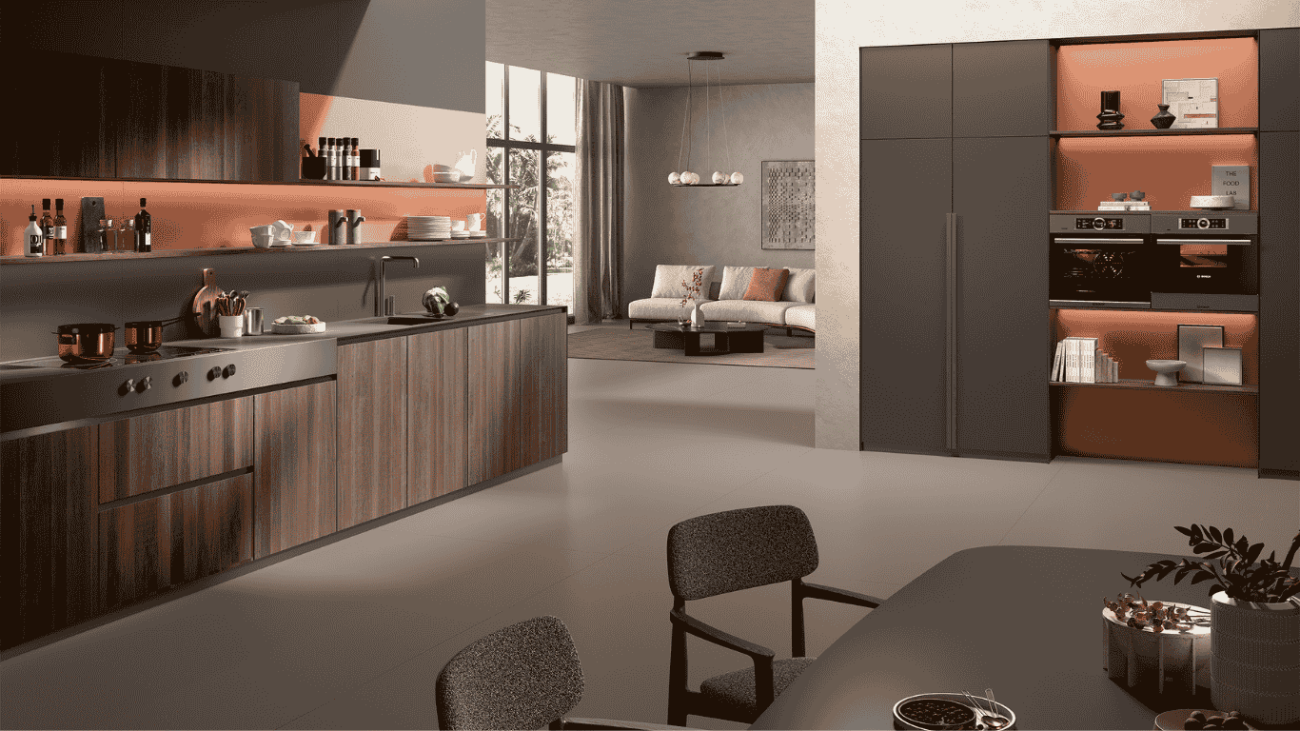
Which Countertop is Best for an Indian Kitchen: Quick Look
Here’s a quick look at the types of kitchen countertops with benefits and limitations to help you find the best countertops for your kitchen.
| Countertop Material | Key Benefits | Limitations |
| Neotra Surfaces | High resistance to stains, heat, and scratches; non-porous, low maintenance, available in various looks, NSF-certified | Requires professional installation |
| Granite | Durable, heat-resistant, and naturally patterned | Porous and may require sealing |
| Quartz | Non-porous, stain-resistant, and available in varied designs | Less heat-resistant than some alternatives |
| Marble | Luxurious appearance and distinctive veining | Prone to scratches, stains, and frequent maintenance |
| Stainless Steel | Hygienic, heat-resistant, and easy to clean | Can show scratches and fingerprints |
| Solid Surface Materials | Seamless joints, varied finishes, and repairability | Can scratch and may be less heat-resistant |
| Concrete | Customisable shapes, colours, and finishes | May crack and requires sealing |
| Ceramic & Porcelain Surfaces | Hygienic, stain-resistant, and available in large formats | Can chip or crack; requires expert installation |
10 Best Types of Countertops for Kitchens
Indian cooking involves a wide range of ingredients, from spices to chopping and grinding, and sometimes heavy cookware slamming onto the countertop. Here’s a breakdown of the 10 best types of countertops for an Indian Kitchen-
1. Neotra Surfaces (Engineered Surface)
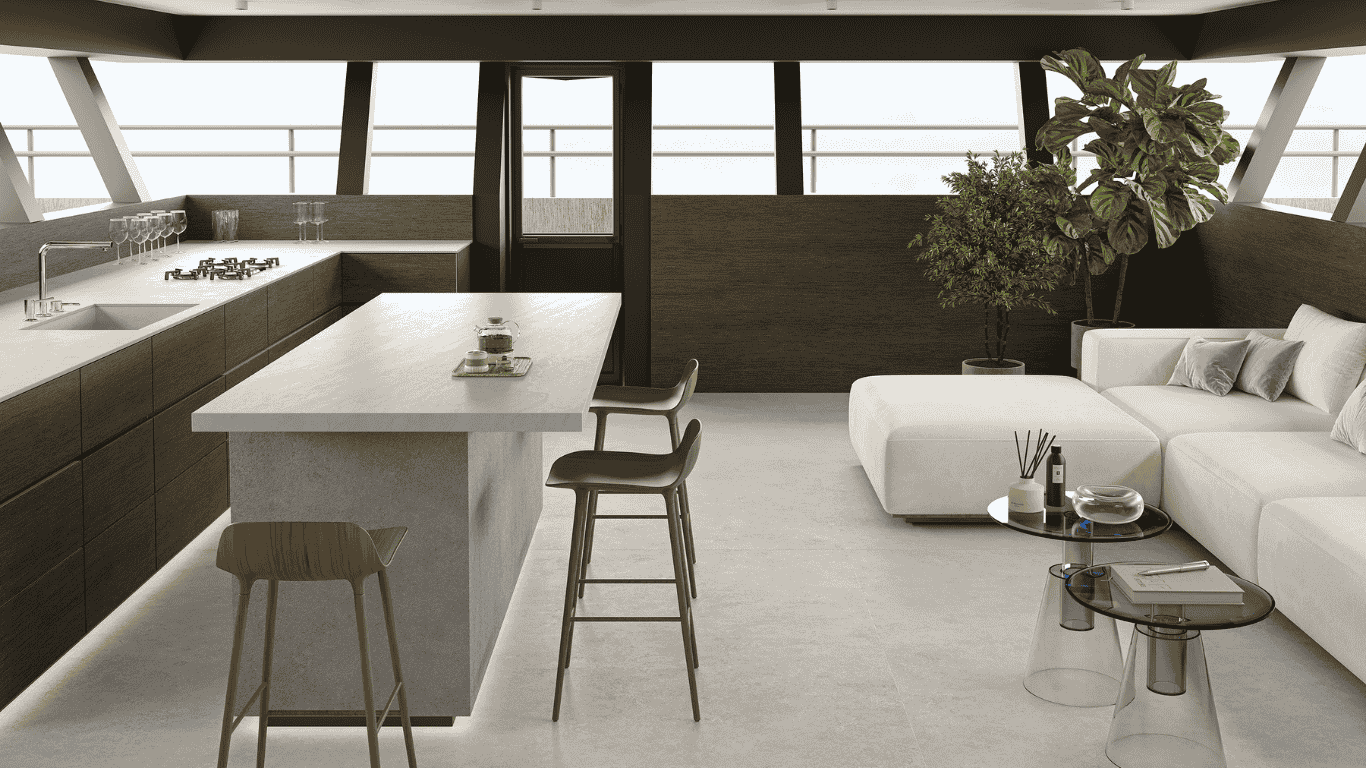
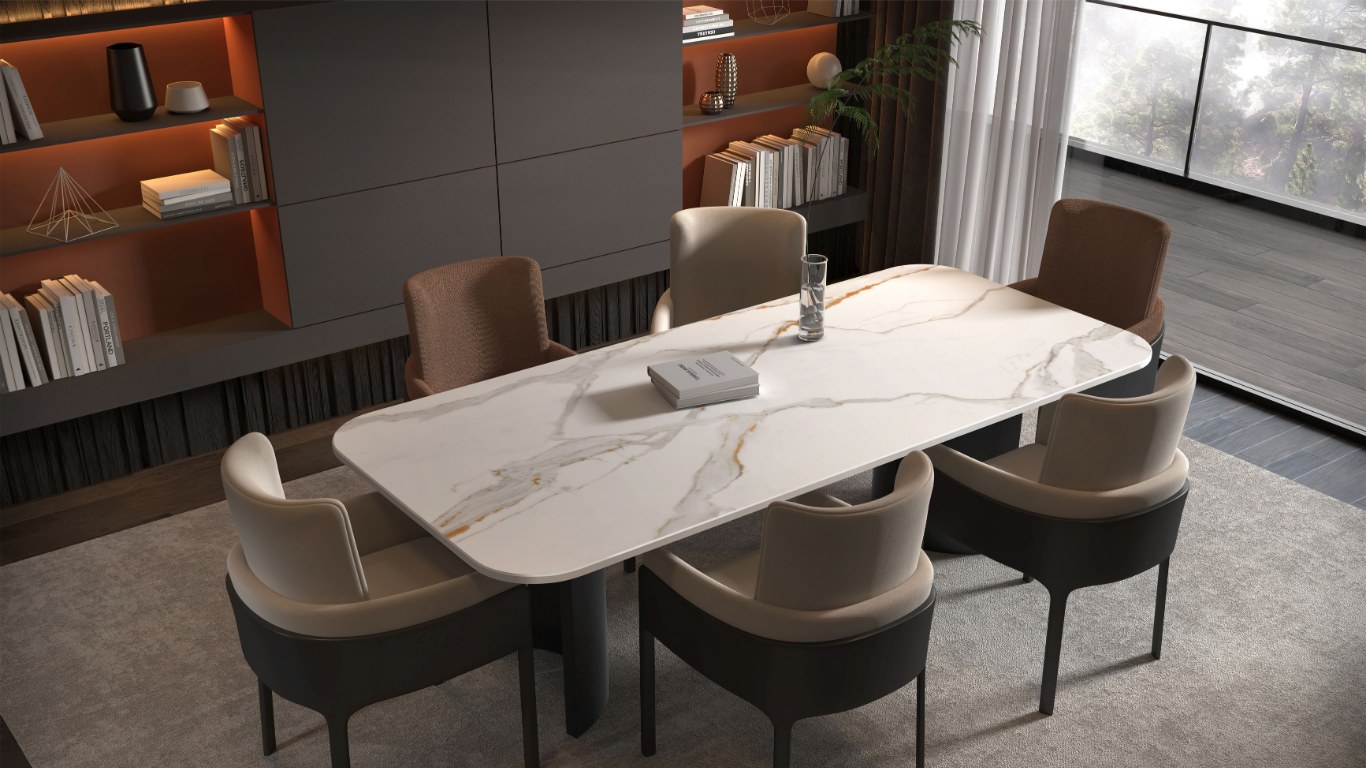
We bring an advanced engineered surface designed for Indian homes, which combines technology and beauty. Key benefits of our countertops are – High resistance to stain, heat and scratches, available in different thicknesses with large-format slabs for a seamless look, and low-maintenance compared to natural stone with a wide variety of patterns from marble veins to minimal tones. Unlike other natural stones, our surfaces are solely composed of natural minerals without resins or any chemical binders and do not emit silica particles. They are perfect for high-traffic areas that demand both strength and elegance.
2. Granite Countertop

Granite has been the go-to choice for Indian homes, known for its toughness and timeless appeal. The granite is a natural stone formed under pressure and heat, making it extremely strong. They are scratch and stain-resistant and can withstand heat. But they are porous, and hence, the chances of bacterial infection are higher.
3. Quartz Countertop

Quartz is an engineered surface of quartz bound with resin, which is becoming popular in urban Indian kitchens due to its non-porous surface. Kitchen slab quartz is harder than natural stones and offers scratch resistance, while it is also non-porous, which does not absorb stains. These resistant bacteria are hygienic but are more expensive than granite and are not as heat-resistant as other materials.
Also Read: Advanced Surfaces vs Quartz: Why Neotra Outperforms Quartz in Modern Architecture
4. Marble Countertop
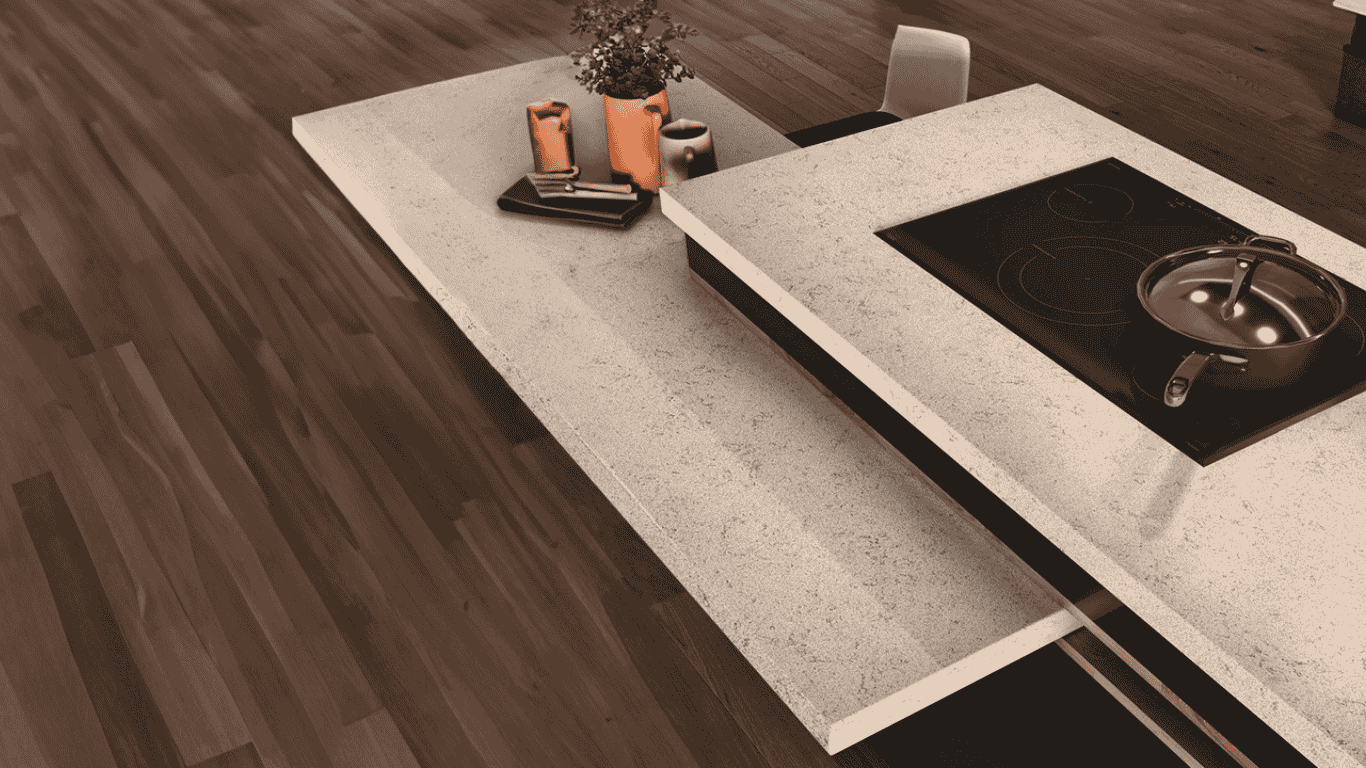
Marble requires careful consideration when used in the kitchen. It can handle moderate heat and is available in various vein patterns that enhance the aesthetic appeal. Gives a luxurious and timeless look and adds value to the house. But they are prone to scratches and are porous, so they absorb stains and require frequent maintenance.
Also Read: Neotra vs Marble: Which Is More Stylish and Practical?
5. Stainless Steel Countertop

For those who prefer hygienic professional kitchens, stainless steel is the one. Extremely hygienic, resistant to stains, heat, and easy to clean but prone to dust and scratches. Widely used in industrial and modern kitchens.
Also Read: Top 5 Durable Stones for Kitchen Slabs in Indian Homes
6. Solid Surface Materials Countertop

They are man-made materials to provide seamless installation and a wide range of finishes. Due to their stain-resistant and non-porous properties, they are widely used. They can be joined seamlessly and are easy to repair. But solid surfaces are not as heat-resistant as natural stone and can be scratched by knives.
7. Concrete Countertop

Concrete countertops bring minimalism and industrial charm and can be cast into different shapes with many decorative elements. Can be customised in various shapes, finishes, and colours. They are durable when sealed properly, but develop cracks over time and need the sealing to prevent stains. Create a raw look with a modern home.
8. Ceramic & Porcelain Surfaces Countertop

A lightweight, hygienic and stylish surface, made by compacting minerals under high pressure and is available in various finishes. These surfaces are resistant to stains and scratches, non-porous and available in large-format slabs. But they can be brittle, and installation requires expertise.
8. Soapstone Countertops
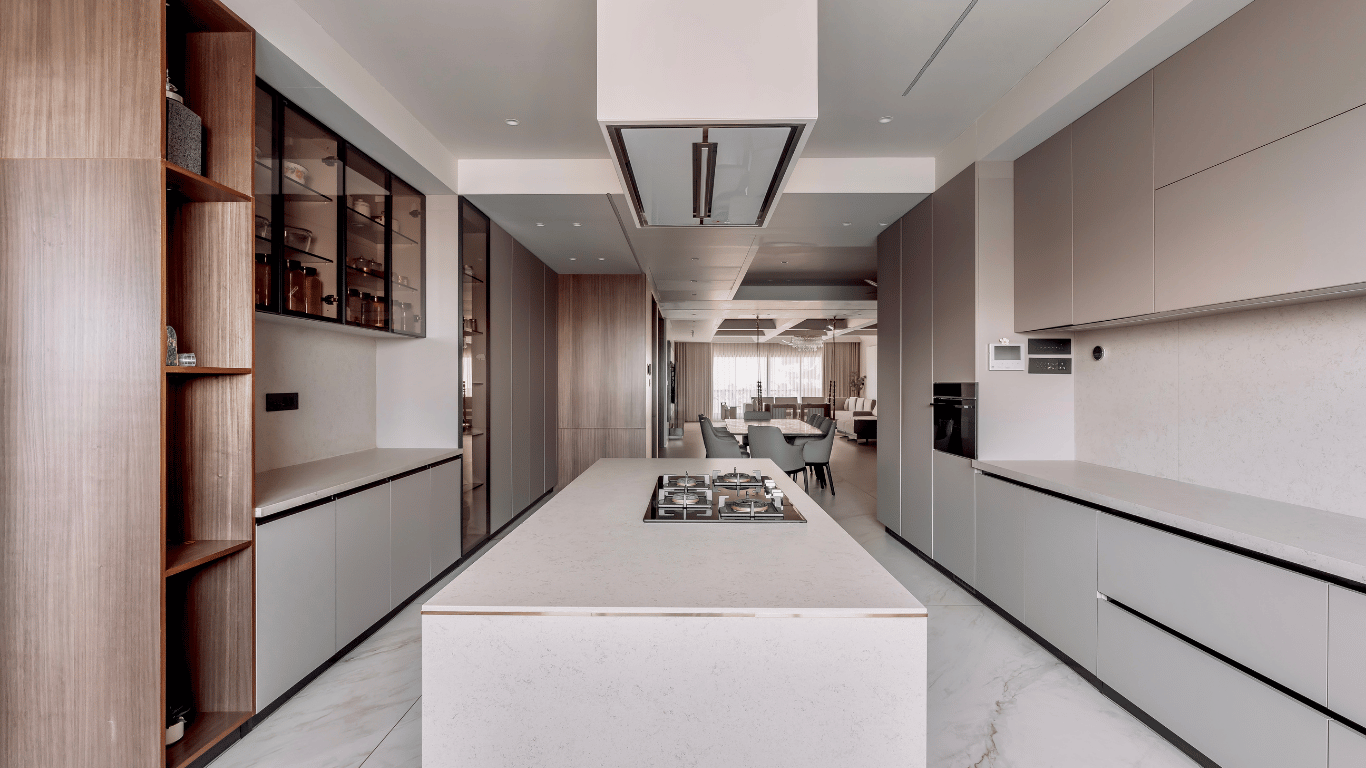
Soapstone is one of the natural types of kitchen countertops known for its smooth texture, subtle veining, and heat resistance. It offers a natural, understated look that suits both traditional and modern kitchens. However, soapstone is relatively soft, making it prone to scratches and marks. Periodic oiling can help deepen its colour and maintain its appearance.
9. Quartzite Countertops
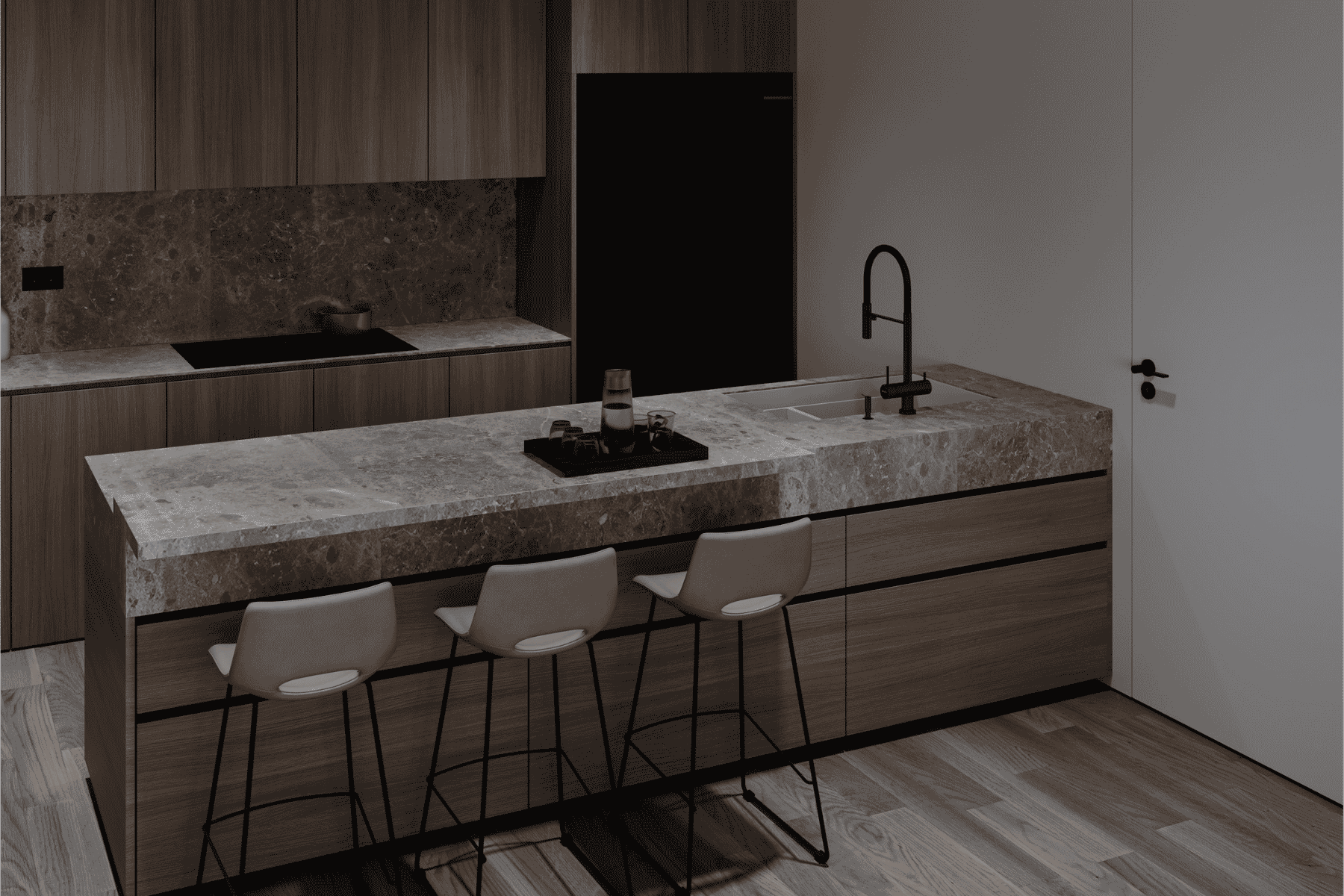
Quartzite is among the durable kitchen top options, valued for its natural veining, strength, and marble-like appearance. It offers good heat resistance and suits kitchens that need both elegance and performance. Among the different types of countertops, quartzite requires proper sealing to help prevent stains. Its hardness can also make cutting and installation more demanding.
Also Read: Top 10 Kitchen Countertop Design Ideas for Modern Homes
Key Factors to Choose the Best Material for Kitchen Countertops
Here are the important factors to consider when choosing a countertop for an Indian kitchen-
- Hygiene protection– This is the absolute priority, as there are chances of spilling food. Our slabs are NSF certified. They are anti-bacterial, viral, fungal and anti-algae.
- Scratch resistance– Cutting on the slabs made easy with Neotra, we have a Neo-Forte surface with superior abrasion resistance, demonstrated by ISO testing.
- Durability– Should withstand wear and tear, such as everyday chopping, and heavy utensils. Neotra slabs are strong and long-lasting.
- Heat and fire resistant– Choose the slab that won’t crack or get discoloured when exposed to heat, as kitchen countertops endure daily wear and tear from chopping vegetables to hot vessels, placing and even handling spills.
- Beauty– Kitchen countertops are the visual centrepiece of the kitchen. Consider the colour, patterns, and finishes that complement your kitchen. Neotra surfaces are UV and frost resistant, unaffected by traffic, resistant to chemicals and unaffected by fungus, which together lead to the superior performance of slabs.
Why Neotra Leads the List of Countertop Choices
Let us compare and see why Neotra Surfaces leads the list of countertop choices over other traditional stone materials.
| Features | Traditional Stone | Neotra Surfaces |
| Durability | Subject to scratches and stains | Scratch, abrasion, and impact resistant |
| Maintenance | Requires regular care | Low maintenance efforts |
| Sustainability | Stones are quarried, and it impacts the environment | Sustainable tangibility, minimal waste |
| Hygiene | The surface is porous, leading to higher chances of bacteria | Non-porous, and hence the surface is anti-bacterial |
| Design Flexibility | Limited to natural patterns | Large format creates a seamless look, varied colours and finishes |
| Certification | Not eco-friendly, not safe for the kitchen | We are IGBC and NSF-certified |
Also Read: Why Architects Prefer Noetra Slabs Over Traditional Stone Materials
Conclusion: Different Types of Countertops
The kitchen countertop defines the look and functionality of your cooking space for years. Understanding the different types of countertops helps you compare materials and choose the right balance of style, durability, and maintenance. While natural stones like granite and marble charm homeowners, engineered surfaces offer a practical option for modern Indian kitchens. Neotra Advanced Surfaces combines design and performance to suit both new kitchens and renovations.